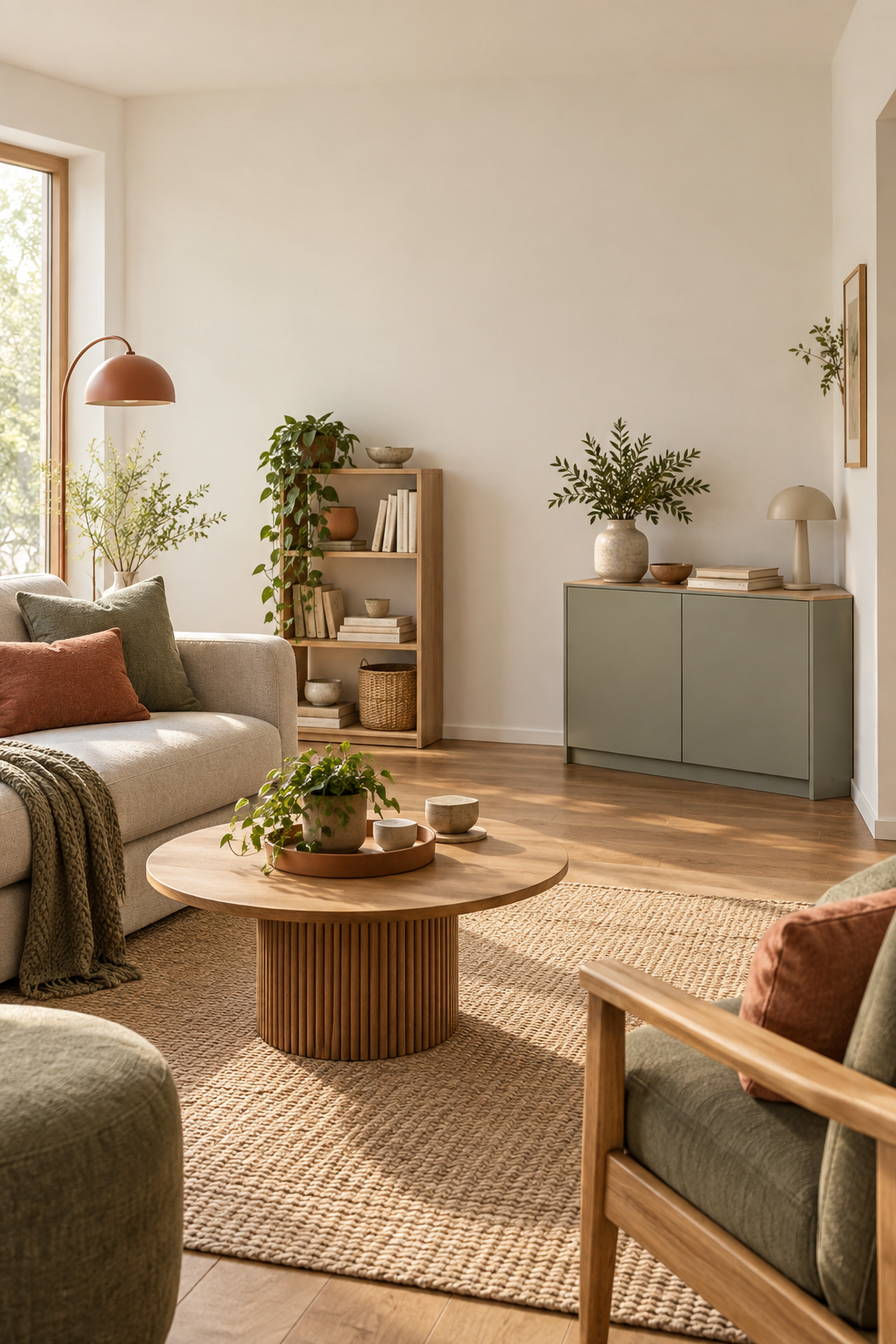
Adding a cabinet does not always make a room easier to use. It can take away walking space while hiding items you never needed nearby. Before shopping, work out what the living room must hold and how often you reach for each item.
1. Sort by use, not by furniture type
Write a short list of what currently lives in the room: books, games, cables, blankets, paperwork, toys, or hobby supplies. For each group, mark whether you use it daily, weekly, or rarely. Keep frequently used items close to where the activity happens. Items used rarely may belong elsewhere if another space is available.
Quick exercise: put the items that have no clear home into one temporary box. After a week, note which ones you actually needed. This gives you a more useful storage list than guessing from a catalogue photo.
2. Measure the space and the access around it
Measure the wall or corner you could use, then mark doors, windows, outlets, vents, and the route people normally take through the room. Include the depth of a proposed cabinet, not just its width. Check how far its doors or drawers need to open and whether someone can stand in front of it comfortably.
A simple paper outline works. You can also tape the proposed footprint on the floor and walk past it. If the outline interrupts a common route, look for a shallower solution or a different position before buying.
3. Decide what should be visible
| Storage style | Useful for | Check before choosing |
|---|---|---|
| Open shelf | Books or a few objects you use and want to see | Will the contents be easy to keep orderly and dust? |
| Closed cabinet | Mixed small items and supplies | Can doors or drawers open fully? |
| Moveable basket or box | Light items that move between activities | Does it have a clear place when not in use? |
Choose based on the items, not a rule that one style always makes a room look larger. A small amount of open storage can be practical. Many visible containers can still make everyday tidying harder.
4. Test one change at a time
First use storage you already own. Give each frequent item a specific home and try the arrangement for several days. If one category still has nowhere sensible to go, describe the missing function precisely: for example, “a place for six board games near the table.” Then compare furniture by usable internal dimensions and access, not just outside appearance.
A buying checklist
- Which exact items will the new piece hold?
- How often will you take them out?
- Have you measured the items and the usable inside space?
- Will drawers, doors, windows, and the walking route still work?
- Could an existing shelf, basket, or a different room solve the problem first?
Make the storage earn its space.
Choose a piece only after you can name the items it will hold and show where it fits in your room.
This guide contains no affiliate links. If links are added later, they will be labelled near the recommendation. How affiliate links work.